


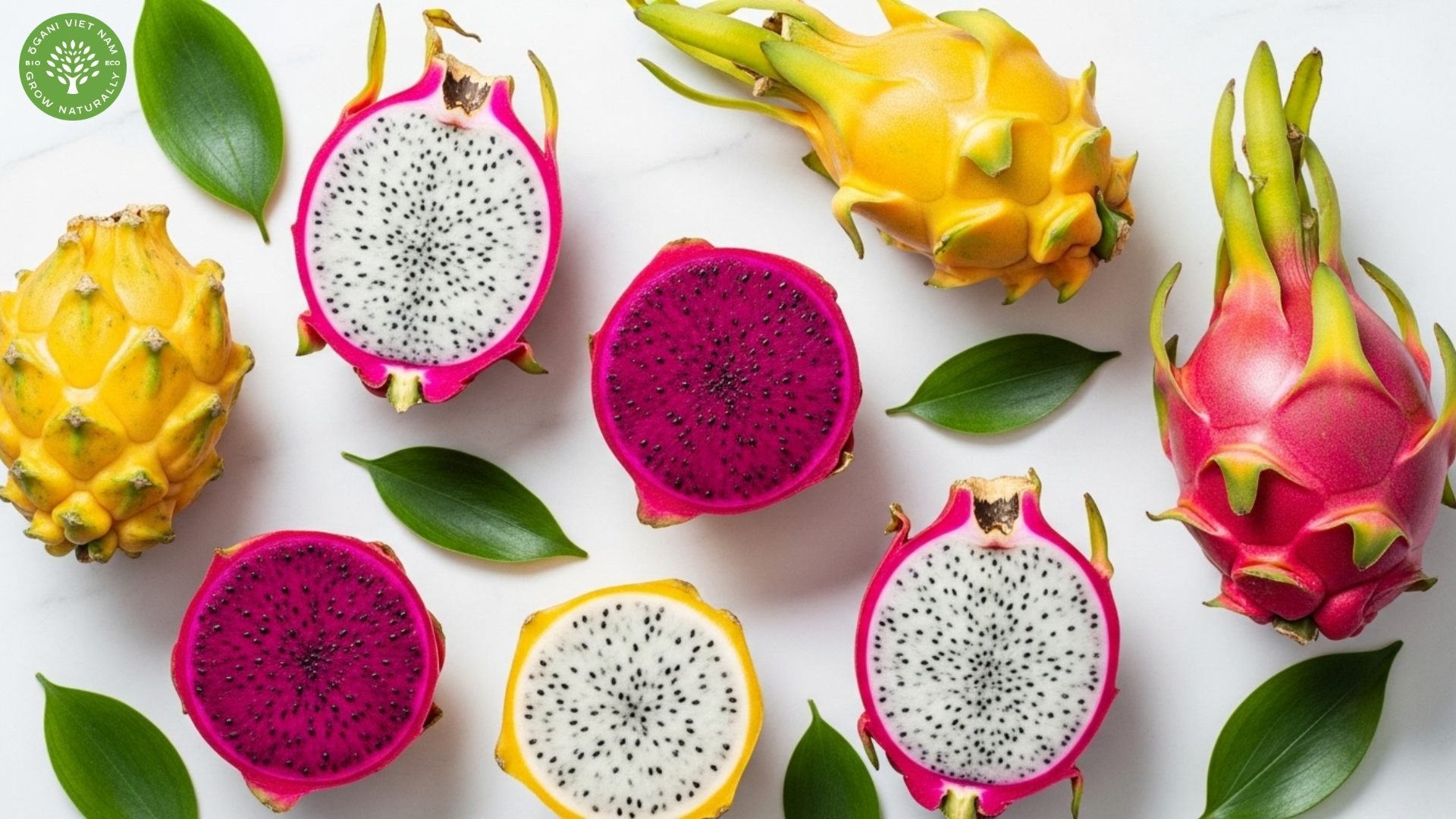
Dragon fruit colours range from vibrant pink and white to deep red, sunny yellow, and even purple—each variety offering its own unique taste profile and nutritional benefits. At Ogani VN, we’ve sourced and tasted them all, and honestly? The differences are more fascinating than you’d expect.
Understanding the main dragon fruit colours and varieties

When you walk through a tropical fruit market, the first thing that catches your eye about dragon fruit (or pitaya, as some call it) is that spectacular outer appearance. But here’s what most people don’t realize—the skin color doesn’t always tell you what’s inside. We’ve had customers come back surprised after cutting open a bright pink dragon fruit to find snow-white flesh dotted with tiny black seeds.
The color variations in dragon fruit come from different species and cultivars within the cactus family. While they all share that distinctive scaly, almost mythical appearance that gives them their dragon name, the flesh and skin combinations create several distinct types. Each variety thrives in different growing conditions, which is why at Ogani VN, we work with farmers across multiple regions to bring you the full spectrum.
White dragon fruit with pink skin
This is the most common variety you’ll encounter, and it’s often what people try first. The contrast is striking—that hot pink or magenta outer skin opens up to reveal pure white flesh speckled with edible black seeds. The taste? It’s subtly sweet, almost delicate. Some customers tell us it reminds them of a mild kiwi mixed with pear, but less acidic.
We’ve noticed this variety stays firm longer after harvest, making it perfect if you’re not planning to eat it immediately. The white flesh also has a higher water content, which makes it incredibly refreshing on hot days.
Red dragon fruit (the antioxidant powerhouse)
Now this is where things get interesting. Red dragon fruit colours are intense—both the skin and flesh share that deep magenta to crimson hue. When you cut into one, it’s almost shocking how vibrant it is. And here’s a fun fact we learned from our farmers: that deep color comes from betalains, the same antioxidants found in beets.
The flavor profile is richer than the white variety. There’s a berry-like sweetness that’s more pronounced, almost like a cross between a raspberry and a melon. One thing to note—and we always warn first-time buyers—the red flesh can temporarily tint your… well, let’s just say don’t be alarmed if things look a bit pink the next day. It’s completely harmless and washes away.
Pink dragon fruit variety
Here’s where it gets a bit confusing. Pink dragon fruit typically refers to varieties with pink or magenta skin but lighter pink or pale red flesh—somewhere between the white and deep red types. We consider these the “in-between” variety. The taste sits right in that middle zone too—sweeter than white, but not as intensely flavored as the deep red.
Honestly, these are underrated. They offer a nice balance, and because they’re less common in some markets, they can sometimes be priced more competitively.
Yellow dragon fruit (the sweet surprise)
Yellow dragon fruit colours are the wild card. The skin is bright yellow with greenish scales, and when you crack it open—white flesh, similar to the pink-skinned variety. But don’t let that fool you. This is hands-down the sweetest of all dragon fruit types.
At Ogani VN, our yellow dragon fruits come from specialized growers because this variety is pickier about growing conditions. The flavor is like honey mixed with tropical fruit—think pineapple meets pear with a touch of banana. They’re smaller than other varieties, but what they lack in size, they make up for in concentrated sweetness. If you’ve got kids who are skeptical about trying dragon fruit, start with yellow.
Purple and sour varieties
Purple-fleshed dragon fruit is the rare gem. It’s similar to the red variety but even deeper in color, almost wine-purple. The taste carries more complexity—slightly tart notes mixed with that betalain-rich sweetness. We get limited quantities of this variety, and they sell out quickly among our regular customers who’ve developed a taste for them.
There’s also a sour dragon fruit variety that’s honestly more of a novelty. It’s used in some traditional dishes and beverages, but for fresh eating, most people prefer the sweeter types.
Taste and nutritional differences between dragon fruit colours
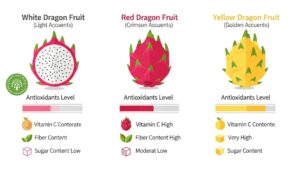
The dragon fruit colours don’t just look different—they actually contain varying levels of nutrients. The deeper the color, generally the higher the antioxidant content. Red and purple varieties pack more betalains and flavonoids compared to white-fleshed types.
But here’s something we’ve learned from working directly with nutritionists: white dragon fruit isn’t nutritionally inferior. It typically contains slightly more dietary fiber and vitamin C per serving. The red varieties win on antioxidants, while yellow varieties often have the highest natural sugar content, which explains why they taste sweeter.
All varieties share some common nutritional benefits:
- High in vitamin C and B vitamins
- Rich in dietary fiber (those tiny seeds contribute!)
- Contains beneficial plant compounds
- Low in calories (about 60 per 100g)
- Natural prebiotics that support gut health
The magnesium and iron content varies slightly between colors, with darker varieties edging out slightly higher levels. But honestly? The differences are marginal enough that we tell customers to choose based on taste preference rather than trying to optimize every micronutrient.
How to select and identify fresh dragon fruit colours
Walking into a market and picking the perfect dragon fruit is partly experience, partly knowing what to look for. At Ogani VN, we’ve trained our staff to spot the best fruits, and we’re sharing those secrets with you.
For all varieties, regardless of color, the skin should be bright and evenly colored. Dull, faded skin usually means the fruit is past its prime. The “scales” or bracts should be slightly flexible but not completely withered. Brown, dried-out scales indicate the fruit was harvested too long ago.
Give it a gentle squeeze. Ripe dragon fruit yields slightly, like a ripe avocado, but shouldn’t feel mushy. If it’s rock hard, it needs a few more days at room temperature. We’ve had customers bring back unripe fruits thinking they were bad, when really they just needed to sit on the counter for 2-3 days.
The weight test rarely fails—a good dragon fruit feels heavy for its size. Light, hollow-feeling fruits are typically dried out inside or were picked immature.
For white-fleshed varieties (pink or yellow skin), look for bright, consistent skin color without dark spots or soft patches. For red and purple varieties, the deeper and more vibrant the color, the riper and more flavorful it will be. We’ve noticed that red dragon fruits with uniform color throughout tend to have the best flavor, while patchy coloring can indicate uneven ripening.
Yellow dragon fruit should be golden-yellow, not greenish (unless you want to ripen them at home). The scales on yellow varieties tend to be more prominent and spiky compared to the smoother pink-skinned types.
Best ways to enjoy different dragon fruit colours
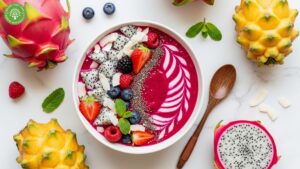
Different dragon fruit colours shine in different applications, and we’ve picked up some tricks from both traditional uses and modern culinary experimentation.
White dragon fruit is your versatile all-rounder. Its mild flavor makes it perfect for smoothie bowls—it won’t overpower other ingredients. We love using it in fruit salads where you want visual interest without dominating the flavor profile. It’s also the best choice for freezing and using in smoothies later because the texture holds up well.
Red and purple varieties are showstoppers for presentation. That vibrant color makes incredible smoothie bowls, natural food coloring, and eye-catching desserts. Fair warning though—that pigment is strong. We’ve learned the hard way that red dragon fruit + white clothing = not a good combination. But in recipes? It’s brilliant. Use it to naturally color chia puddings, yogurt bowls, or even baked goods.
For yellow dragon fruit, because it’s so sweet, we recommend enjoying it fresh and simple. Chill it well, cut it in half, and scoop out the flesh with a spoon. The sweetness is perfect on its own. It also makes incredible sorbet—just blend frozen yellow dragon fruit with a touch of lime juice.
One unconventional way we’ve started using dragon fruit at Ogani VN events? Grilling it. Cut thick slices of any variety, brush with honey, and give them a quick char on the grill. The heat intensifies the sweetness and adds this subtle caramelization. It pairs surprisingly well with savory dishes.
The black seeds in all varieties are edible and add a slight crunch, kind of like kiwi seeds. Some people pick them out, but they contain beneficial omega-3 and omega-6 fatty acids, so we encourage eating them.
Frequently Asked Questions
Which dragon fruit color is the healthiest?
Red and purple varieties contain the highest levels of antioxidants due to their betalain content, but white-fleshed dragon fruit offers more fiber and vitamin C. At Ogani VN, we believe the healthiest choice is the one you’ll actually enjoy eating regularly. All colors provide excellent nutritional benefits.
Does dragon fruit color affect the taste significantly?
Yes, absolutely. Yellow dragon fruit colours are noticeably sweeter, red varieties have a berry-like richness, and white types offer a more subtle, refreshing taste. The differences are distinct enough that most people develop a clear preference after trying all varieties.
Can I eat the dragon fruit skin?
The outer skin isn’t typically eaten as it’s tough and not particularly pleasant. However, the pink/yellow exterior is not toxic. Some people use small pieces of the skin in smoothies for extra nutrients, but at Ogani VN, we recommend sticking to the flesh for the best eating experience.
Why is my dragon fruit tasteless?
Two common reasons: it was harvested too early, or it’s the white variety which naturally has a milder flavor compared to yellow or red types. Dragon fruit doesn’t continue to ripen significantly after harvest, so if it was picked immature, it won’t develop much sweetness. This is why we work directly with farmers to ensure proper harvest timing.
How can I tell if dragon fruit has gone bad?
Look for dark brown spots, overly soft or mushy texture, or a fermented smell. The flesh should be firm and the color (white, red, or yellow) should be vibrant, not dull or discolored. If the fruit feels hollow or extremely lightweight, it’s likely dried out and past its prime.
Experience the full spectrum of dragon fruit colours with Ogani VN
Understanding dragon fruit colours transforms this exotic fruit from a mysterious tropical novelty into an accessible, delicious addition to your regular fruit rotation. Whether you prefer the subtle sweetness of white-fleshed varieties, the antioxidant-rich intensity of red types, or the honey-sweet surprise of yellow dragon fruit, there’s a color variety perfectly suited to your palate.
At Ogani VN, we’re passionate about connecting you with the freshest, most vibrant tropical fruits directly from trusted farmers. We source all five major dragon fruit colours and can help you discover your favorite variety. Ready to experience the full spectrum? Visit our store or shop online to find premium dragon fruit delivered fresh to your door. Our team is always happy to share preparation tips and recipe ideas to help you get the most out of these beautiful fruits.
Don’t settle for bland, past-prime dragon fruit from generic suppliers. Choose Ogani VN for fruits that are picked at peak ripeness and handled with care from farm to your table. Your taste buds (and your Instagram feed) will thank you.
Read more:
- Red Pitaya Powder: The Ultimate Superfood Guide For Health
- Dried Mango Nutrition: Complete Guide To Health Benefits.
- Dried Unsweetened Mango: Healthy Snack Guide
- Dried Mango vs Freeze‑Dried Mango: Nutrition, Texture & Best Uses
- Dragon Fruit Dried: Your Complete Guide to This Exotic Superfood Snack