


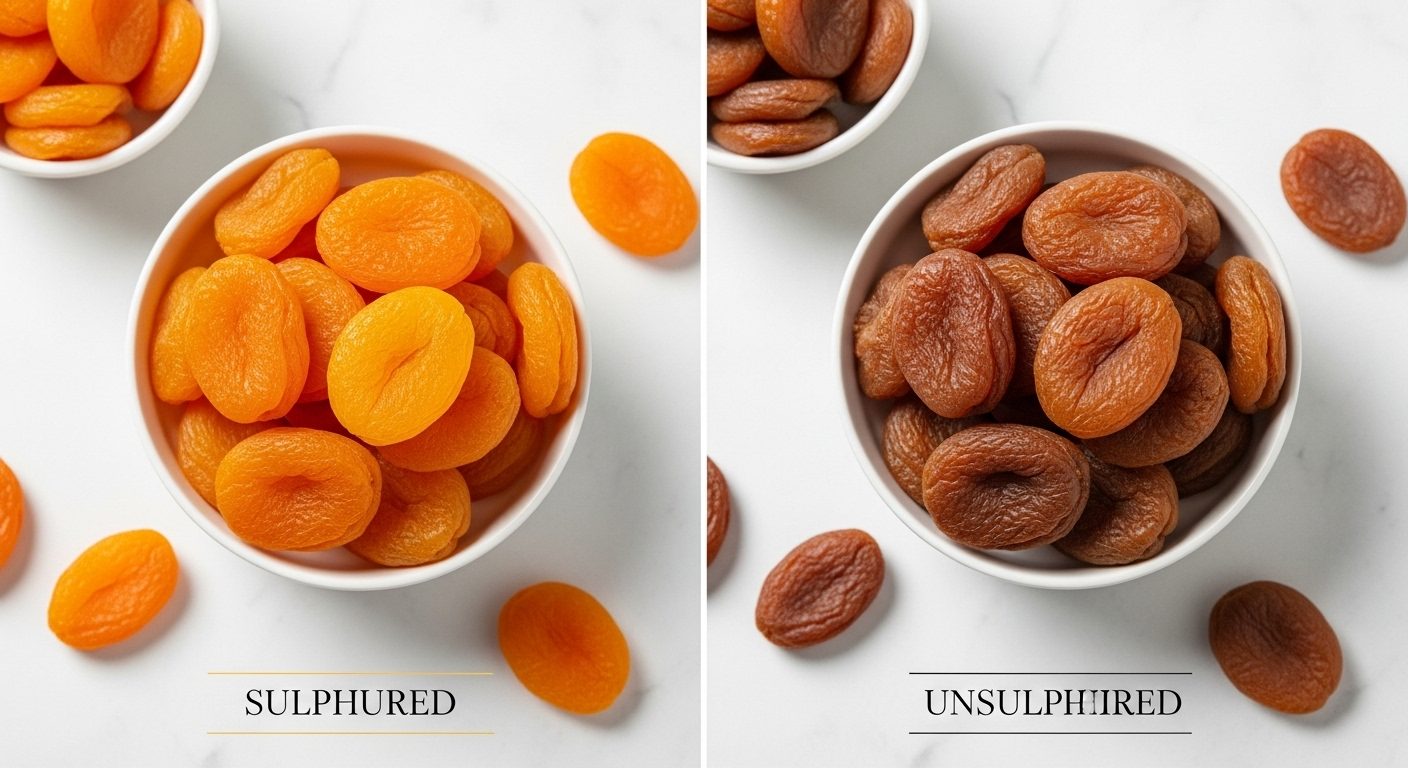
When shopping for dried fruit, you’ve probably noticed labels saying “sulphured” or “unsulphured” and wondered what the difference is. Here’s the straight answer: sulphured vs unsulphured dried fruit differs primarily in processing methods—sulphured varieties are treated with sulphur dioxide to preserve color and extend shelf life, while unsulphured options skip this chemical treatment, resulting in darker colors but potentially higher nutritional value.
At Ogani VN, we get this question almost daily from customers standing in our dried fruit aisle, phone in hand, genuinely confused. Should they grab the bright orange apricots or the brownish ones? Is one healthier? Does it even matter? Let’s break this down in a way that actually helps you make the right choice for your family.
Understanding sulphured vs unsulphured dried fruit: the processing difference
The whole debate starts with one chemical: sulphur dioxide (SO2). This isn’t some mysterious laboratory invention—it’s been used in food preservation for centuries, dating back to ancient times when people burned sulphur candles in wine barrels.
When producers make sulphured dried fruit, they expose fresh fruit to sulphur dioxide gas or dip it in a sulphite solution before drying. This treatment does several things at once: it locks in that vibrant color you see in store displays, prevents browning from oxidation, kills bacteria and mold spores, and helps the fruit retain moisture during storage. Think of those gorgeous golden apricots or bright yellow pineapple rings—that’s sulphur dioxide at work.
Unsulphured dried fruit, on the other hand, goes through drying without any sulphur treatment. The result? Fruit that looks more like what you’d expect if you left an apple slice on your kitchen counter—brown, darker, less Instagram-worthy. But here’s something most people don’t realize: that browning is just the natural oxidation of sugars and enzymes. It doesn’t mean the fruit is bad or less nutritious. In fact, it might mean the opposite.
We’ve tested both types extensively in our sourcing process at Ogani VN, and honestly, the color difference is dramatic. Place them side by side, and you’d think they’re different fruits entirely. One looks like it just came off the tree; the other looks like it’s been, well, dried.
Sulphured vs unsulphured dried fruit: visual and taste comparisons
Let’s talk about what you’ll experience when you actually eat these fruits, because that’s what matters most, right?
Color variations across different fruits
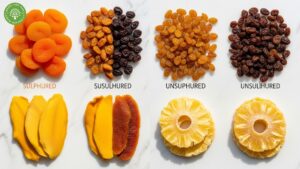
Apricots show the most striking difference in the sulphured vs unsulphured dried fruit debate. Sulphured apricots are bright orange, almost neon, while unsulphured ones are brownish and darker. Dates naturally resist color changes, so you’ll barely notice a difference there. Raisins made with sulphur treatment stay lighter and more golden; without it, they turn deep brown or almost black. Dried pineapple and mango? Same story—sulphured versions look fresh and vibrant, unsulphured versions look caramelized.
Here’s a funny thing we’ve noticed at Ogani VN: customers often pick up the darker fruit, think it looks “old,” put it back, and grab the bright one—completely unaware they just chose the chemically treated option over the natural one. Marketing wins again.
Taste and texture comparison
Now for taste. Sulphured dried fruits tend to be slightly tangier, with a subtle sharpness you might not immediately identify as the sulphur compound. Unsulphured fruits taste richer, sometimes almost caramelized, because the natural sugars have oxidized during drying. Some people swear unsulphured fruit has more “authentic” flavor, while others find sulphured versions more palatable.
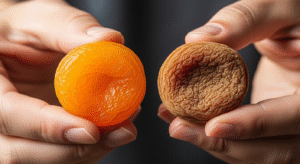
Texture-wise, sulphured fruit often stays softer and more pliable. The sulphur treatment helps retain moisture, so you get that chewy, pleasant texture. Unsulphured fruit can be slightly drier, sometimes tougher, though this depends heavily on the drying method and storage conditions.
I personally keep both types in my pantry. For baking where color matters—like in cakes or granola bars I’m giving to someone—I’ll use sulphured. For snacking or smoothies where appearance doesn’t matter? Unsulphured all the way. The flavor depth is just better.
Nutritional differences in sulphured vs unsulphured dried fruit
This is where things get interesting from a health perspective. The sulphuring process isn’t neutral—it actually affects the nutritional profile, particularly one key vitamin.

Sulphur dioxide degrades thiamine, also known as vitamin B1. This isn’t a conspiracy theory or marketing hype—it’s documented science. Studies show that sulphured dried fruits have lower levels of thiamine compared to their unsulphured counterparts. If you’re relying on dried fruit as a thiamine source (which, let’s be honest, most people aren’t), this matters.
But here’s the nuance: most dried fruits aren’t stellar thiamine sources to begin with. You’re eating them for fiber, natural sugars, potassium, and other minerals. The thiamine loss, while real, probably won’t make or break your diet unless you have specific deficiencies.
Other nutrients? They’re relatively similar between both types. The drying process itself—whether sulphured or not—concentrates sugars and certain minerals while reducing water content. Both versions provide iron, potassium, fiber, and natural fruit sugars. The calorie content is essentially identical.
At Ogani VN, we’ve had nutritionists debate this at our supplier meetings. The consensus? If you eat a varied diet, the thiamine difference is minimal. If you have specific health conditions or dietary restrictions, that’s when unsulphured might edge ahead.
Health considerations when choosing sulphured vs unsulphured dried fruit
Now we’re getting to the part that really makes people nervous: safety and health implications.
Sulphite sensitivity and allergies
Here’s the critical issue: some people are genuinely sensitive or allergic to sulphites. The FDA estimates about 1 in 100 people have some level of sulphite sensitivity, and it’s more common among people with asthma. Reactions can range from mild (headaches, hives, digestive upset) to severe (difficulty breathing, anaphylaxis in rare cases).
If you’ve ever eaten sulphured dried fruit and felt slightly off afterward—maybe a headache, some stomach discomfort, or respiratory irritation—you might have sulphite sensitivity. This isn’t in your head. Sulphur dioxide and its related compounds (sulphites) are recognized allergens.
We’ve had customers at Ogani VN tell us stories about finally figuring out their mystery headaches were from the “healthy” dried fruit snacks they’d been eating daily. Switching to unsulphured versions eliminated the problem entirely.
Long-term consumption considerations
For people without sulphite sensitivity, moderate consumption of sulphured dried fruit is generally recognized as safe by food authorities. The keyword here is “moderate.” If you’re eating dried fruit occasionally as a snack, the sulphur exposure is minimal and unlikely to cause issues.
However, if you’re the type who goes through a bag of dried apricots every few days, or you’re feeding these to young children regularly, you might want to lean toward unsulphured options. Why add unnecessary chemical exposure when a natural alternative exists?
The European Union has stricter regulations on sulphite levels in food than the US, which tells you something about ongoing debate in food safety circles. It’s not that sulphured fruit is dangerous per se, but there’s a growing preference for minimally processed options.
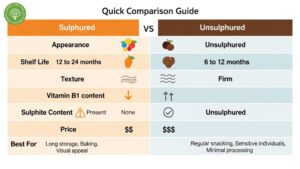
Practical guide: choosing between sulphured vs unsulphured dried fruit for your lifestyle
Let’s get practical. Here’s how to actually make this decision based on your real life, not some theoretical ideal.
When to choose sulphured dried fruit
Pick sulphured options when:
- You’re using the fruit for decorative purposes or where appearance matters (party platters, gift baskets, baking where color is important)
- You prefer softer, more pliable texture
- You’re on a tight budget (sulphured is often cheaper due to longer shelf life and mass production)
- You have no known sulphite sensitivity
- You’re buying in bulk for long-term storage
When to choose unsulphured dried fruit
Go unsulphured when:
- You or family members have asthma or known sulphite sensitivity
- You’re feeding young children regularly
- You prefer minimally processed foods as a general principle
- You don’t mind darker appearance
- You’re eating dried fruit frequently and want to minimize chemical exposure
- You prefer richer, more caramelized flavors
How to identify them in stores
Reading labels is crucial because manufacturers don’t always make this obvious. Look for these terms:
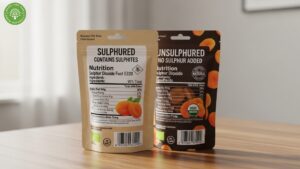
Sulphured fruit labels may say: “treated with sulphur dioxide,” “contains sulphites,” “preserved with SO2,” or list E220-E228 (European codes for various sulphite compounds).
Unsulphured fruit labels may say: “no sulphur added,” “unsulphured,” “sulphite-free,” or “naturally dried.”
One tricky thing: some products say “no preservatives added” but still use sulphur dioxide because it’s classified as a processing aid rather than a preservative in some jurisdictions. Check the ingredient list carefully.
At Ogani VN, we’ve made it simple: all our products have clear labeling on the front of the package. No detective work required.
Frequently asked questions
Can I eat both sulphured and unsulphured dried fruit?
Absolutely. Unless you have sulphite sensitivity, there’s no medical reason to avoid one or the other completely. Many people keep both types for different purposes—sulphured for presentation, unsulphured for regular snacking.
Is darker dried fruit spoiled?
No. The brown color in unsulphured dried fruit is natural oxidation, not spoilage. Check for actual signs of spoilage like mold, off smells, or unusual texture. Color alone doesn’t indicate quality.
Do organic dried fruits use sulphur?
Not usually. Most organic certifications prohibit or severely limit sulphur dioxide use. However, always check the label—”organic” and “unsulphured” aren’t automatically the same thing.
How long does each type last?
Sulphured dried fruit typically lasts 1-2 years stored properly. Unsulphured dried fruit has a shorter shelf life, usually 6-12 months, because the sulphur dioxide acts as a preservative. Both should be stored in airtight containers in cool, dry places.
Can I remove sulphur from sulphured dried fruit?
Some people soak sulphured fruit in water before eating, which can reduce sulphite content slightly. However, you can’t completely remove it since the compound penetrates the fruit during processing.
Making your choice: what works best for you and your family
After all this information, here’s the bottom line: both sulphured vs unsulphured dried fruit have their place, and the “better” option depends entirely on your situation.
If you have sulphite sensitivity, asthma, or you’re feeding young children regularly, unsulphured is the clear winner. The slightly higher price and darker appearance are minor tradeoffs for peace of mind and avoiding potential reactions.
If you’re looking for longer shelf life, softer texture, and vibrant colors—and you have no health concerns about sulphites—sulphured dried fruit is perfectly fine. Millions of people eat it daily without issues.
At Ogani VN, we stock both varieties because we believe in giving you the choice. We’ve seen customers switch from sulphured to unsulphured and feel noticeably better. We’ve also seen people stick with sulphured because it works for them. Both groups are making the right decision for their needs.
The most important thing? Read labels, listen to your body, and don’t stress too much about making the “perfect” choice. Dried fruit—whether sulphured or not—is still a better snack option than most processed alternatives.
Ready to try high-quality dried fruit and taste the difference for yourself? Visit Ogani VN’s online store or stop by our retail locations to explore our full selection of both sulphured and unsulphured options. Our team can help you find exactly what works for your lifestyle and dietary preferences. Make the switch today and discover which type becomes your new favorite! health blogger speculation; it’s documented science
Read more:
- Baking With Dried Red Dragon Fruit: Breads, Muffins & Cookies
- Dried Red Dragon Fruit vs Fresh: Color, Nutrition & When to Use Each
- Dragon Fruit Powder: Unlocking Ít Superfood Potential for Health and Wellness.
- Red Dragon Fruit Dried: Your Complete Buying Guide
- Sulphured Vs Unsulphured Dried Fruit: Which One Should You Choose?