


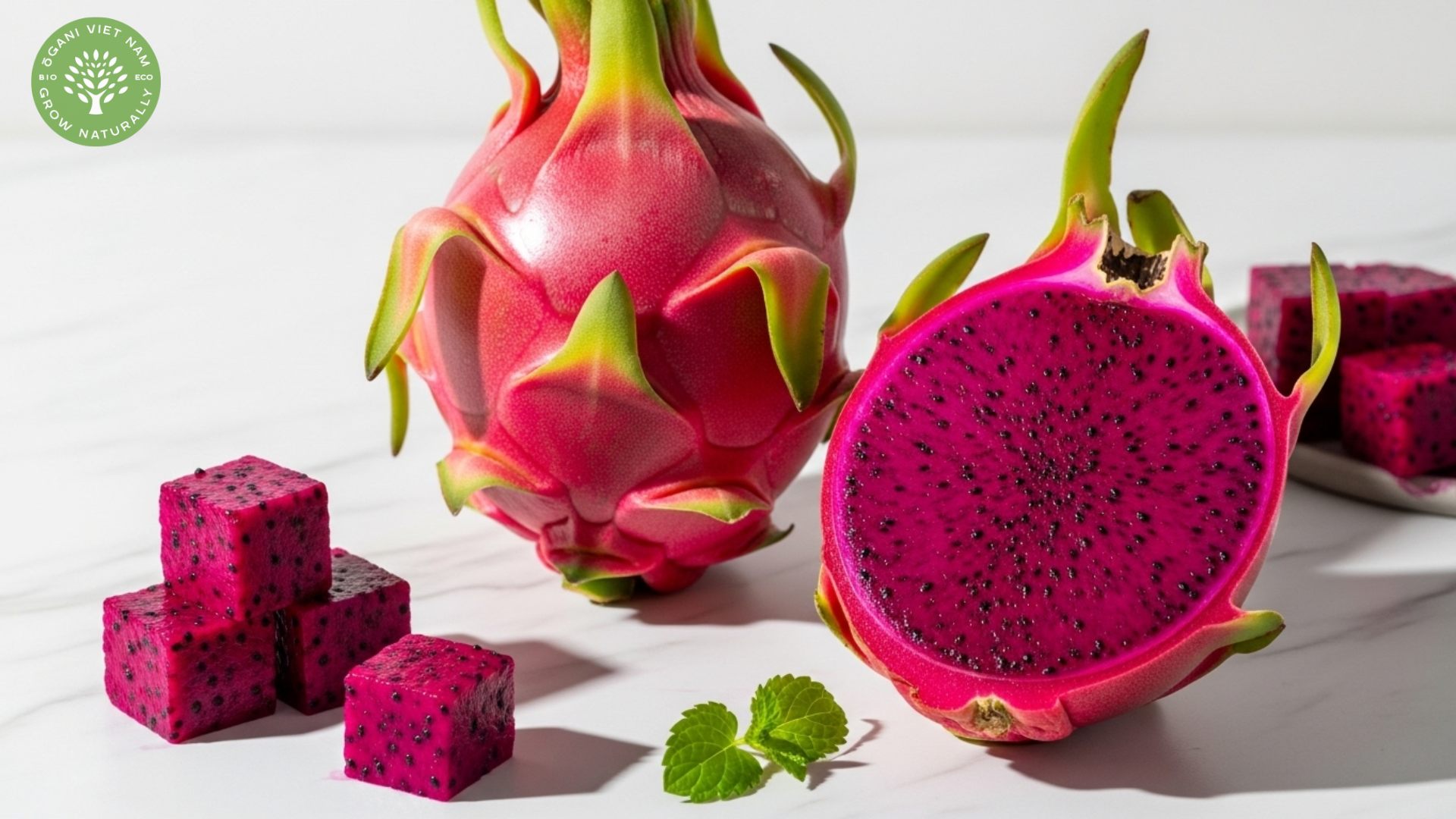
At Ogani VN, we’ve been fascinated by the vibrant red dragon fruit ever since we first discovered this tropical treasure. This stunning cactus fruit, with its bright pink exterior and speckled flesh, isn’t just a feast for the eyes – it’s a nutritional powerhouse that deserves a place in your diet.
What Makes Red Dragon Fruit Special
Red dragon fruit, also known as pitaya or pitahaya, grows on climbing cacti native to Mexico and Central America. Unlike its white-fleshed cousin, the red variety boasts a deeper, richer flavor profile that reminds us of a delightful blend between watermelon and kiwi – with just a hint of pear sweetness.
The fruit’s appearance alone makes it Instagram-worthy: that hot pink skin adorned with green scale-like leaves looks like something from a fantasy novel. But here’s what really caught our attention at Ogani VN – when you slice open this tropical gem, you’re greeted with either deep magenta or bright red flesh dotted with tiny black seeds, creating a stunning visual contrast.
What sets red dragon fruit apart from other tropical fruits is its unique growing conditions. These cactus vines thrive in warm climates and actually bloom at night, earning them the nickname “moonflowers.” The flowers themselves are massive – some reaching up to 14 inches in diameter – and emit a sweet fragrance that attracts nocturnal pollinators.
Health Benefits of Red Dragon Fruit That Surprise Everyone

When we first started offering red dragon fruit at Ogani VN, customers were curious but skeptical. Now? They can’t get enough once they learn about its impressive health benefits.
Antioxidant powerhouse
The deep red color isn’t just for show – it signals the presence of betalains, powerful antioxidants that help fight free radicals in your body. These compounds are relatively rare in fruits, making pitaya particularly special. Studies suggest betalains may help reduce inflammation and protect against certain chronic diseases.
Gut health champion
Each serving of this cactus fruit contains about 7 grams of fiber – that’s nearly 25% of your daily needs! But it’s not just the quantity; red dragon fruit contains both soluble and insoluble fiber, supporting digestive health and promoting beneficial gut bacteria. We’ve had customers tell us they noticed improved digestion within weeks of adding it to their routine.
Natural immune booster
With vitamin C levels that rival citrus fruits, this tropical fruit supports your immune system naturally. One cup provides about 20% of your daily vitamin C needs, plus smaller amounts of iron, magnesium, and vitamins B1, B2, and B3. The combination helps your body absorb nutrients more efficiently.
How to Select and Store Red Dragon Fruit Like a Pro
Over the years at Ogani VN, we’ve learned a few tricks for choosing the perfect pitaya. Trust us – there’s nothing worse than cutting into an expensive fruit only to find it’s overripe or flavorless.
Selection tips we swear by

Look for bright, evenly colored skin without too many blemishes or dark spots. The fruit should feel heavy for its size (that means it’s juicy!) and give slightly when pressed, like a ripe avocado. Avoid fruits with dried, yellowing leaves or soft, mushy spots – these are past their prime.
Here’s a secret most people don’t know: the more vibrant the pink color, the riper and sweeter the fruit. Those pale pink ones you sometimes see? They were picked too early and won’t have that characteristic sweet-tart flavor we love.
Storage wisdom from experience
Fresh red dragon fruit can sit on your counter for 2-3 days if it needs more ripening. Once ripe, pop it in the fridge where it’ll keep for up to a week. We’ve found that storing them in the crisper drawer, wrapped loosely in a paper towel, helps absorb excess moisture and prevents premature spoiling.
Want to extend its life even further? Cut the flesh into cubes and freeze them in airtight containers. Frozen pitaya chunks make fantastic smoothie additions and can last up to three months.
Creative Ways to Enjoy Red Dragon Fruit
The versatility of red dragon fruit constantly amazes us. Sure, you can simply cut it in half and scoop out the flesh with a spoon (our kids’ favorite method!), but why stop there?
Fresh preparations
The classic approach: slice the fruit lengthwise, then either scoop out the flesh or peel away the skin. Those tiny black seeds? They’re edible and add a pleasant crunch, similar to kiwi seeds. We love cubing the flesh and tossing it into fruit salads where its mild sweetness complements stronger flavors like pineapple or mango.
For a stunning presentation, try this trick we learned from a local chef: cut the fruit into thick rounds, then use cookie cutters to create fun shapes. Kids go crazy for dragon fruit stars!
Beyond basic eating

At Ogani VN, we’ve experimented with countless recipes. Dragon fruit smoothie bowls have become our breakfast obsession – blend frozen red dragon fruit chunks with banana and coconut milk, then top with granola and fresh berries. The color alone will wake you up!
For something more adventurous, try grilling thick slices brushed with honey and lime juice. The heat caramelizes the natural sugars, creating an unexpectedly complex flavor that pairs beautifully with vanilla ice cream.
Red Dragon Fruit vs White: Which Should You Choose?
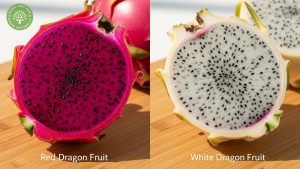
Customers often ask us about the difference between red and white varieties. While both come from the same cactus family, they’re definitely not identical twins.
The red dragon fruit tends to be sweeter with sugar levels consistently above 15 Brix (that’s the measurement for sweetness in fruit). White dragon fruit usually hovers around 10-12 Brix, giving it a more subtle, refreshing taste. Think of it this way: if white dragon fruit is like a delicate pear, the red variety is more like a sweet watermelon.
Nutritionally, red varieties pack more punch. They contain higher levels of betalains and vitamin C compared to their white counterparts. The trade-off? Red dragon fruit can be messier to eat – that vibrant juice stains everything it touches! (Pro tip: lemon juice helps remove stains from hands and cutting boards.)
Price-wise, red dragon fruit typically costs more due to lower yields and higher demand. But honestly? We think the superior flavor and nutrition make it worth the extra investment.
Frequently Asked Questions
Q: Does red dragon fruit really taste better than white? A: In our experience at Ogani VN, yes! Red varieties have a noticeably sweeter, more complex flavor. However, taste is subjective – some people prefer the milder white variety.
Q: Can I eat dragon fruit seeds? A: Absolutely! Those tiny black seeds are completely edible and provide extra fiber and healthy fats. They add a pleasant crunch similar to kiwi seeds.
Q: Why is my dragon fruit tasteless? A: This usually means it was harvested too early. Pitaya doesn’t ripen much after picking, so always choose fruits with vibrant color and slight give when pressed.
Q: Is dragon fruit good for weight loss? A: With only 60 calories per 100 grams and high fiber content, red dragon fruit can definitely support weight management goals. The fiber helps you feel full longer.
Q: Can diabetics eat dragon fruit? A: While dragon fruit has natural sugars, its high fiber content helps moderate blood sugar spikes. As always, diabetics should consult their healthcare provider about incorporating new foods.
Transform Your Diet with Red Dragon Fruit from Ogani VN
After years of bringing the finest red dragon fruit to our customers, we’re still amazed by this remarkable superfruit. Its stunning appearance, delightful taste, and impressive nutritional profile make it more than just another exotic fruit – it’s a delicious way to boost your health naturally.
Ready to experience the magic of pitaya for yourself? Visit Ogani VN today to select from our carefully sourced collection of premium red dragon fruits. Our expert staff can guide you in choosing the perfect fruits and share more creative serving suggestions. Don’t just take our word for it – let your taste buds discover why red dragon fruit has become one of our bestselling tropical fruits.
Contact us at Ogani VN to place your order or learn about our weekly specials on fresh dragon fruit and other exotic produce. Your journey to healthier, more adventurous eating starts with just one bite!
Read more:
- Red Pitaya Powder: The Ultimate Superfood Guide For Health
- Dried Mango Nutrition: Complete Guide To Health Benefits.
- Dried Unsweetened Mango: Healthy Snack Guide
- Dried Mango vs Freeze‑Dried Mango: Nutrition, Texture & Best Uses
- Red Dragon Fruit: The Exotic Superfruit You Need To Try