


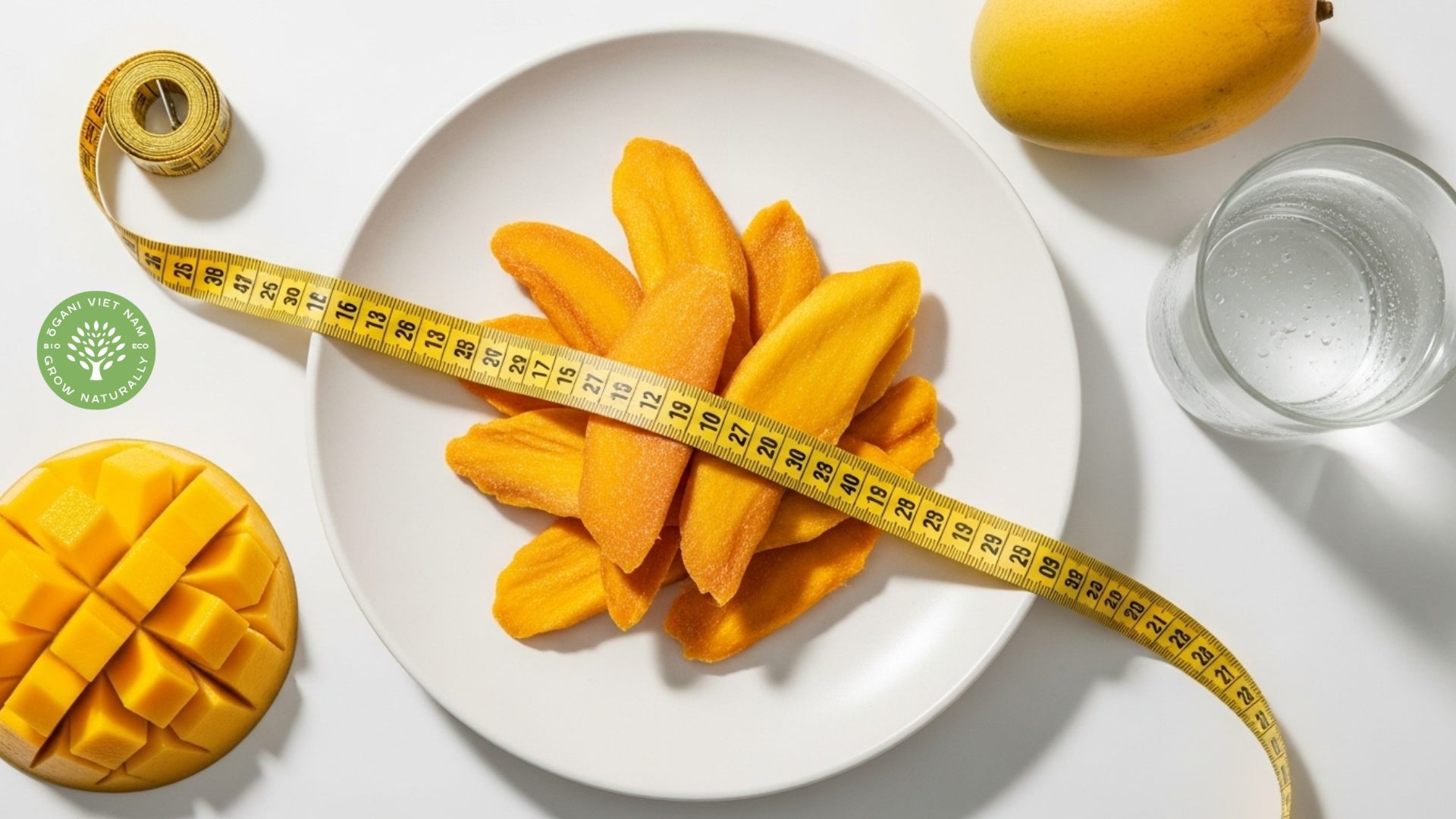
Dried mango weight loss success needs a balanced approach that looks at both the benefits and the limits of this snack. Dried mango can help satisfy sweet cravings and give nutrients during your weight journey, but its high calorie level means portion control is very important for good results.
Dried mango weight loss basics: Understanding nutritional impact

When fresh mango goes through the dehydration process, water removal makes both nutrients and calories more concentrated. A typical 40-gram serving of dried mango has about 140 calories, while fresh mango has 60 calories per 100 grams. This calorie level means you get much more energy in each small bite.
The fiber content in dried mango is 1-3 grams per serving, which can help you feel full. However, this fiber amount is lower than fresh fruit because of the processing. The natural sugars also become concentrated during drying, making dried mango very sweet. This can satisfy cravings but may lead to overeating if you do not watch your portion.
Vitamin C, vitamin A, and folate are still in dried mango, but their levels may be lower than in fresh fruit. These nutrients support general health during weight loss, but they should not be the main reason for adding dried mango to your diet plan.
How dried mango weight loss works: Satiety and appetite effects
The link between dried mango weight loss success mainly depends on portion size and timing. Studies that compare fresh and dried mango show that fresh mango makes you feel full longer because it has more water and fiber. Dried mango is more concentrated, so it is easy to eat more calories without feeling full.
Fiber’s role in appetite regulation
The fiber in dried mango can help slow digestion and make you feel more full. This type of fiber may also help keep your blood sugar steady when you eat it with other foods. However, because dried mango has less water, it does not give the same volume as fresh fruit, so it may not help you feel full for long.
Natural sugar considerations
Dried mango has concentrated fructose, and this type of sugar does not activate fullness hormones the way protein or complex carbs do. This makes it easy to eat too many calories from dried fruit compared to fresh fruit. The strong sweetness can also make you crave more sweet foods later in the day.
Dried mango weight loss strategies: Smart inclusion methods
To use dried mango for weight management, treat it as a concentrated energy food, not a low-calorie snack. Eating small portions with protein or healthy fats can help control blood sugar and keep you feeling full longer.
Portion control strategies

A good serving size is 3-4 pieces, about 30-40 grams per day. This gives sweet satisfaction while keeping calories under control. Pre-portioning dried mango into small containers helps avoid eating too much at once.
Timing considerations
Eating dried mango near workout times gives quick energy for exercise. The natural sugars fuel activity, and the calories are used instead of stored. Eating it after exercise with protein can help restore energy in muscles.
Combination approaches

Mixing a little dried mango with nuts, seeds, or Greek yogurt makes a balanced snack. The protein and healthy fats slow sugar absorption and help you feel full. This way, you enjoy sweetness while supporting weight control.
Comparing dried versus fresh mango for weight loss
Fresh mango has several benefits for dried mango weight loss goals. Its higher water content gives volume and fullness with fewer calories. A cup of fresh mango cubes has about 100 calories, while the same amount of dried mango has nearly 400 calories.
The fiber in fresh mango stays intact, helping digestion and controlling blood sugar. Chewing fresh fruit also helps you feel full and eat more slowly. Eating the skin adds extra fiber, which most dried mango lacks.
Dried mango, however, is convenient and lasts longer. It is easy to carry, does not need refrigeration, and can satisfy sweet cravings when fresh fruit is not available. The key is knowing these differences and controlling portions.
Common dried mango weight loss mistakes and how to avoid them
The main problem with dried mango weight loss is eating too much because it tastes very sweet and is small in size. People often eat many servings without noticing the calories. Some commercial dried mango also has added sugar or sulfur dioxide, which adds more calories.
Reading labels helps you choose unsweetened, organic options without extra additives. These give more nutrients and fewer extra calories. Even unsweetened dried mango is high in calories, so portion control is important for weight loss.
Another mistake is replacing fresh fruits entirely with dried mango. This lowers nutrients and water intake while increasing calories. Dried mango should be a complement, not a replacement, in a balanced weight loss plan.
Frequently Asked Questions
How much dried mango can I eat daily while losing weight? Eat 30-40 grams (3-4 pieces) per day to enjoy sweetness and nutrients without too many calories.
Is unsweetened dried mango better for weight loss? Yes, unsweetened dried mango has no added sugar, so it has fewer calories and is better for weight control.
Can I eat dried mango before workouts? Yes, a small portion gives quick energy if eaten 30-60 minutes before exercise.
Does dried mango help with sugar cravings? Yes, its natural sweetness can satisfy cravings, but keep portions small to avoid extra calories.
Making dried mango work for your weight loss journey
Dried mango weight loss works best with careful eating and simple rules. This sweet snack can stop cravings and give some nutrients, but it does not make you lose weight by itself. Eat it as a small treat, not every day. Watch your portion and eat it with healthy foods.
At Ogani VN, we help people eat healthy while still enjoying tasty foods. Start with a small amount of dried mango and see how your body reacts. Try our dried fruits to enjoy sweet snacks and stay healthy.
Read more:
- Dried Mango Weight Loss: Can This Sweet Snack Support Your Goals?
- Organic Dried Mango: Your Complete Guide To Healthy Snacking
- How to Store Dried Mango & Maximize Shelf Life (Pantry, Fridge, Freezer)