


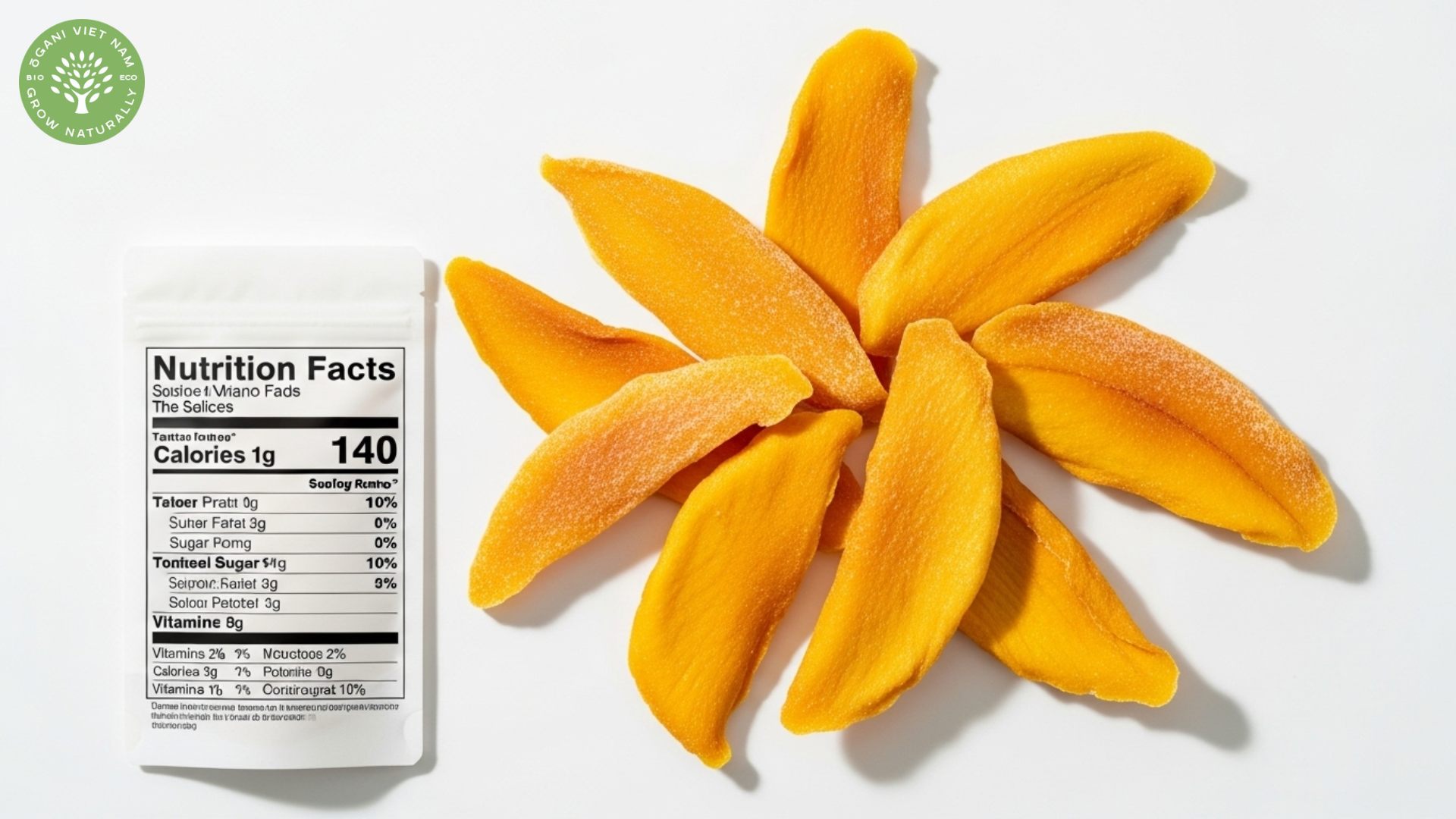
Dried mango nutrition facts show that 100 grams have about 314 calories, 81 grams of carbs, 66 grams of natural sugars, and vitamins like vitamin C. It has more calories than fresh mango, but still gives nutrients that support your health when eaten in moderation.
At Ogani VN, we help people understand dried fruit better. Knowing what’s inside each chewy, golden slice makes it easier to enjoy dried mango in a healthy way.
Dried mango nutrition facts: essential breakdown
Drying mango changes its nutrition. Taking out water makes vitamins, minerals, and natural sugars more concentrated in a small portion.
A normal 40-gram serving (about 5-6 slices) usually has:
- Calories: 130-140
- Carbohydrates: 32-35g
- Natural sugars: 26-28g
- Protein: 1g
- Fat: 0-0.5g
- Dietary fiber: 1-2g
- Sodium: 50-85mg
The calorie difference is easy to see. One cup of fresh mango has about 100 calories, but the same amount of dried mango has nearly 500 calories. This is why portion control is very important.
Processing affects calories too. Organic, unsweetened dried mango usually has fewer calories and no added sugar. Sweetened commercial versions can have more than 350 calories per 100 grams because of extra sugar.
Complete dried mango nutrition facts: vitamin and mineral analysis
Even after drying, dried mango still has many vitamins and minerals. Some nutrients become stronger per gram, while a few may be a little lower than in fresh mango.
Preserved vitamins and minerals
Dried mango keeps many important nutrients even after drying. Vitamin A gives about 25% of your daily needs per serving, supporting eyes, immunity, and skin. Beta-carotene, the orange color, stays well.
Potassium is still high at 200–300 mg per serving, helping your heart and muscles. Magnesium, iron, and calcium are also present, though a little less than in fresh mango.
Vitamin C considerations
Drying changes some nutrients. Fresh mango has about 60 mg vitamin C per cup, but dried mango nutrition facts show only 15–20 mg per same amount. Heat and air during drying lower this vitamin.
Some brands add vitamin C back, so reading labels is important. This can make dried mango have vitamin C close to fresh fruit.
Dried mango nutrition facts versus fresh fruit comparison

At Ogani VN, we know people often think dried mango is either very healthy or not healthy at all. The real answer is simple: dried mango can be good for you when eaten in small, proper portions.
Legitimate health benefits
Dried mango has less fiber than fresh fruit but still helps your digestion and keeps blood sugar steady. One to two grams per serving may be small, but it adds up when you eat other fiber foods during the day.
Antioxidants like mangiferin and gallic acid stay well after drying. They help protect your cells and may lower inflammation.
Potassium supports heart health, and vitamin A strengthens the immune system. Dried mango is an easy, shelf-stable fruit option for people who want nutrients without extra preparation.
Realistic concerns to consider
The main issue with dried mango is sugar. One serving has about 26-28 grams of natural sugar, which can raise blood sugar, especially for people with diabetes.
Dried mango is also high in calories.
It is easy to eat 300-400 calories without feeling full, while the same calories from fresh mango would make you feel fuller and hydrated.
Some dried mango has sulfites as preservatives. People who are sensitive to sulfites should check the label before eating.
Comparing dried versus fresh mango nutrition
Drying mango changes its nutrition in clear ways. Nutrients and sugars become more concentrated, so you should eat dried mango in smaller portions than fresh mango.
Water content impact
Fresh mango has about 84% water, which helps you feel full and stay hydrated. Dried mango has only 15-20% water, so sugar and calories are much stronger. One serving of dried mango is like eating 4-5 fresh mangoes in sugar and calories, so it is important to eat small amounts.
Nutrient density changes
Fresh mango has more vitamins and minerals per calorie than dried mango. It also has more fiber for better digestion and stable blood sugar.
Dried mango is easy to carry and store. It does not need a fridge, so it is good for travel, quick snacks, or keeping as an emergency food.
Practical usage differences
We suggest eating fresh mango every day for vitamins, hydration, and fiber. Use dried mango in special cases: before exercise, on hikes, or when fresh mango is not available.
Think of dried mango as a concentrated snack, not a replacement for fresh fruit. This helps control portions and avoid eating too much.
Serving size recommendations and smart consumption
Portion control is very important with dried mango because it has more calories and makes you feel full less than fresh fruit.
Standard serving guidelines
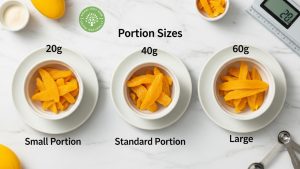
Most labels show a 40-gram serving (about 5-6 pieces) with 130-140 calories. This fits general advice for dried fruit.
For weight control, 20-30 grams is safer. It gives sweetness and nutrients but fewer calories.
Active people or those who need more energy can eat more, but 60-80 grams is usually the most for most people.
Timing and combination strategies

Eating dried mango with protein or healthy fat helps control blood sugar. Try small portions with nuts, yogurt, or cheese for steady energy.
Before exercise, it gives quick energy. After exercise, it helps restore energy when combined with protein.
Do not eat dried mango alone or on an empty stomach, especially if you need to manage blood sugar. The sugars are absorbed quickly without other nutrients.
Frequently Asked Questions
How many dried mango pieces can I eat per day? Eat 5–6 pieces (about 40g) each day. This gives nutrients without too many calories. Active people can eat a little more, but watch total sugar and fruit intake.
Is unsweetened dried mango better than sweetened versions? Yes. Unsweetened mango has only natural sugars. Sweetened mango adds extra sugar and calories. Always check the label.
Can dried mango help with constipation? It has some fiber that helps digestion, but it is not very high. Drink water and eat other high-fiber foods too.
Does dried mango cause weight gain? Eating too much can cause weight gain because it has many calories. Stick to the recommended portion.
How does organic dried mango differ nutritionally? Organic mango avoids pesticides and may have a bit more antioxidants. The main benefit is fewer chemicals; the nutrition is mostly the same.
Making smart choices with dried mango
Knowing dried mango nutrition facts helps you make good choices for your health. Dried mango has real nutrients and is easy to eat, but it is concentrated, so you should control portions.
At Ogani VN, we suggest eating dried mango as a small snack, not like fresh fruit. It gives energy and nutrients, but watch the calories.
Try our organic, unsweetened dried mango for healthy snacking. It gives nutrition without extra sugar or additives. You can ask our team for advice on the right portion for your diet.
Read more:
- Dried Mango Nutrition Facts: Complete Guide To Calories, Benefits & Health Impact
- Best Dried Mango No Sugar Added: Premium Quality Guide
- Calories In Dried Mango No Sugar Added: Complete Nutrition Guide
- Are Dried Mangoes Good For You? The Complete Health Guide
- Dried Mango Calories: Complete Nutrition Guide & Healthy Snacking Tips