


Dehydrated mango usually has about 128–140 calories per serving (around 40–42 grams or 4–6 pieces), making it a quick, concentrated source of energy compared to fresh mango. At Ogani VN, we know that knowing the calorie content helps you make smarter choices — whether you’re keeping an eye on your weight or just curious about the nutritional value of this sweet tropical snack.
Understanding dehydrated mango calories per serving
The calories in dehydrated mango can vary depending on the serving size and how it’s made. Most store-bought dried mango has about 314 calories per 100 grams, which is roughly 3.1 calories per gram. This happens because drying removes water, concentrating the fruit’s natural sugars and nutrients.
Here’s what typical servings look like:
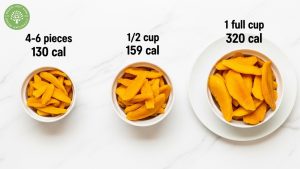
A snack-size serving of 4–6 pieces (around 40–42 grams) has about 128–140 calories.
Half a cup of dried mango pieces is around 159 calories, and a full cup can reach 320 calories — almost like a small meal.Calories also depend on whether the mango is sweetened or unsweetened:
Unsweetened organic mango (like Trader Joe’s) has about 130 calories per 40-gram serving.
Sweetened versions can go up to 319 calories per 100 grams because of added sugar.
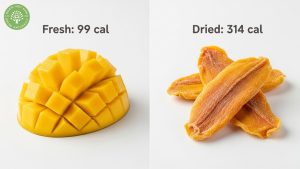
By comparison, fresh mango has only 99 calories per cup. Drying makes the fruit about 3 times more calorie-dense, so you get much more energy in a smaller portion than fresh mango.
Dehydrated mango calories vs fresh mango nutrition
Macronutrient breakdown
When you compare dehydrated mango calories to fresh mango, the biggest difference is how concentrated the nutrients are. Dried mango has about 81.6 grams of carbohydrates per 100 grams, including around 27 grams of sugar, while fresh mango has roughly 15 grams of carbohydrates per 100 grams.
Protein stays low in both — dried mango has about 1–2.5 grams per 100 grams, and fresh mango is similar. Fat is minimal in both, usually less than 1 gram per serving, making dried mango almost a fat-free snack.
Fiber is another difference. Fresh mango provides about 1.6 grams per 100 grams, while dried mango has slightly less, typically 1–2 grams per standard serving, due to the drying process.
Vitamin and mineral retention
The dehydration process affects vitamins in different ways. Vitamin C, which fresh mango has a lot of (about 60 mg per 100 grams), drops significantly during drying. Most dried mango keeps only 15–19% of the Daily Value per serving.
Some nutrients become more concentrated. Vitamin A often increases per gram because water is removed, and minerals like potassium mostly stay the same. Iron absorption may even improve, as we’ve seen when helping customers understand these changes.
This means each bite gives you more vitamins and minerals, but also more calories and sugar. That’s why watching your portion is key for healthy snacking.
Dehydrated mango calories for weight management and health
Calorie density and satiety factors
Dehydrated mango calories can be both useful and tricky for weight management. Its high calorie density means even a small handful gives a good energy boost, which is great for active people or when you need quick energy. But this also means you need to keep an eye on portions if you’re watching your weight.

Research shows that the chewy texture and sweetness of dried mango can help satisfy sugar cravings with smaller portions than many processed snacks. The natural fruit sugars give quick energy, and the fiber adds some fullness, though less than the same calories from fresh fruit.
A key point we share with Ogani VN customers: dried mango doesn’t have the water that fresh fruit does, which usually helps you feel full. This makes it easy to eat too many calories without realizing it, which could lead to unintended weight gain if portions aren’t controlled.
Blood sugar impact and timing
The concentrated sugars in dried mango can make your blood sugar rise faster than fresh fruit. For most people, this isn’t a problem, but if you have diabetes or insulin sensitivity, it’s important to watch portion sizes and timing.
Eating dried mango with protein or healthy fats can help slow the sugar spike. Many Ogani VN customers like pairing a small portion with nuts or yogurt for a balanced snack that gives steady energy without big swings in blood sugar.
For athletes or post-workout recovery, the quick sugars in dried mango can be helpful, giving fast energy when your body needs it most.
Managing dehydrated mango calories through smart buying
Choosing quality products
When buying dried mango to manage your dehydrated mango calories, it’s important to read the labels carefully. Unsweetened, organic varieties usually give the best nutritional value without the extra added sugars that can raise calorie content a lot.

When choosing dried mango, look for products that list only “mango” or “organic mango” in the ingredients. Try to avoid added sugars, sulfur dioxide, or artificial preservatives, as these can raise calories and affect taste and nutrition.
Package size matters for keeping portions in check. Single-serving packs make it easier to avoid eating too much, though they can cost more per ounce. Bulk packs work too, but you’ll need self-discipline or should pre-portion into smaller containers at home.
At Ogani VN, we recommend always checking the nutrition label. Some brands list calories per piece, others per weight, so reading carefully helps you compare accurately.
Storage for optimal freshness
Keeping your dried mango fresh helps protect both its flavor and nutrition. Store opened packs in airtight containers in a cool, dry spot. You can refrigerate them to last longer, though the texture might change a little.
Vacuum-sealed packs stay fresh the longest, often 12–18 months if stored properly. Once opened, try to finish within 6–12 months for the best taste and texture. Watch for off smells, mold, or very hard pieces as signs it’s gone bad.
To manage dehydrated mango calories, divide bulk packs into single-serving containers right away. This keeps the rest fresh and helps you control portions easily.
Frequently Asked Questions
Q: How many pieces of dried mango equal one fresh mango in calories?
A: One medium fresh mango has about 99 calories. You’d need around 3–4 pieces of dried mango (about 24–32 grams) to match that, but you’ll get much less volume and fiber.
Q: Is dried mango good for weight loss?
A: Dried mango can fit into a weight loss plan if you eat small portions. Think of it as a sweet treat, since it’s high in calories — about 314 calories per 100 grams.
Q: Can diabetics eat dried mango safely?
A: People with diabetes should check with their doctor. The concentrated sugars can raise blood sugar, so small portions, eaten with protein or after exercise, work best.
Q: How does homemade dehydrated mango compare to store-bought?
A: Homemade dried mango usually has fewer calories per piece because it doesn’t have added sugar. Still, drying concentrates natural sugars, so it’s calorie-dense compared to fresh fruit.
Q: What’s the best time to eat dried mango for weight management?
A: Before or after a workout is best, as the sugars give quick energy. Avoid eating it late at night, when your metabolism slows.
Making smart choices with dehydrated mango calories
Understanding dehydrated mango calories helps you enjoy this tropical snack while staying on track with your health goals. A usual serving has 128–140 calories, and 100 grams contain about 314 calories, so it’s nutrient-rich and best eaten mindfully.
At Ogani VN, we know that making smart choices makes a real difference. Whether you want quick energy for workouts, a natural sweet treat, or easy, portable nutrition, dried mango can fit your day when enjoyed thoughtfully.
Looking for premium dried mango? Check out Ogani VN for organic, unsweetened options that deliver great taste and concentrated nutrition. Every bite helps you enjoy a healthy and satisfying snack while keeping your portions in check.
Read more:
- Dehydrated Mango Calories: Complete Nutrition Guide
- Best Dried Mango No Sugar Added: Premium Quality Guide
- Calories In Dried Mango No Sugar Added: Complete Nutrition Guide
- Are Dried Mangoes Good For You? The Complete Health Guide